

The Superintendence of Higher Education

Frequently Asked Questions
La Superintendencia de Educación Superior es un organismo público creado por la ley N° 21.091, sobre Educación Superior, orientado a fiscalizar y supervigilar el cumplimiento de las disposiciones legales y reglamentarias que regulan a las universidades, institutos profesionales y centros de formación técnica del país, así como fiscalizar porque éstos destinen sus recursos a los fines que les son propios, de acuerdo a la ley y sus estatutos.
This institution was created as part of the National System of Quality Assurance of Higher Education, also composed by the Ministry of Education, the National Accreditation Commission and the National Council of Education.
The purpose of this new oversight body is to contribute to the improvement of the quality of higher education by collaborating with other bodies in the system to increase transparency and public trust in institutions, while safeguarding the public faith that society places in them.
The main functions of the Superintendency of Higher Education, operationalized in the strategic objectives it has set for itself, are as follows:
- To ensure compliance with regulations and the sustainability of higher education institutions, while also safeguarding that they allocate their resources to their proper purposes in accordance with the law and their statutes.
- To efficiently and promptly attend to and manage denunciations, complaints, and information requests from the different stakeholders in the higher education system.
- Increase transparency levels in the higher education system by providing relevant and timely information to its various stakeholders.
- Promote the implementation and strengthening of capacities and practices in higher education institutions that allow compliance with applicable regulations, with the aim of contributing to educational quality.
- To contribute, in coordination with the National Accreditation Commission, the National Council of Education, and the Undersecretariat of Higher Education, to the strengthening of the Quality Assurance System in Higher Education (SINACES).
To carry out its oversight tasks, the Superintendence has the following powers, among others:
Require higher education institutions to provide information regarding their financial and asset situation, the composition of their administrative and governing bodies, agreements and conventions entered into with related entities, and other essential facts that may strategically affect the institution.
Cite the members of the administrative and governing bodies, as well as the senior authorities of the institution.
Request clarifying information from higher education institutions for the proper management of complaint and grievance applications.
Forward the background to other public agencies (SERNAC, Directorate of Labor, Public Ministry, SII, etc.) for cases of complaints and allegations that fall outside their scope of competence.
Establish sanctioning processes and apply fines to higher education institutions, when appropriate.
To attend the higher education institution's facilities to monitor their operations on-site.
In situations of serious non-compliance by the controllers of an institution of higher education, appoint a provisional administrator to manage it and evaluate its academic and financial viability.
The Superintendency of Higher Education has an electronic form on its website, www.sesuperior.cl, where all complaints and/or reports are entered. Users must register by entering their personal and contact information. When submitting your complaint or report, you must include, with the greatest possible detail, the background of the case and attach all information considered relevant to aid in its processing.
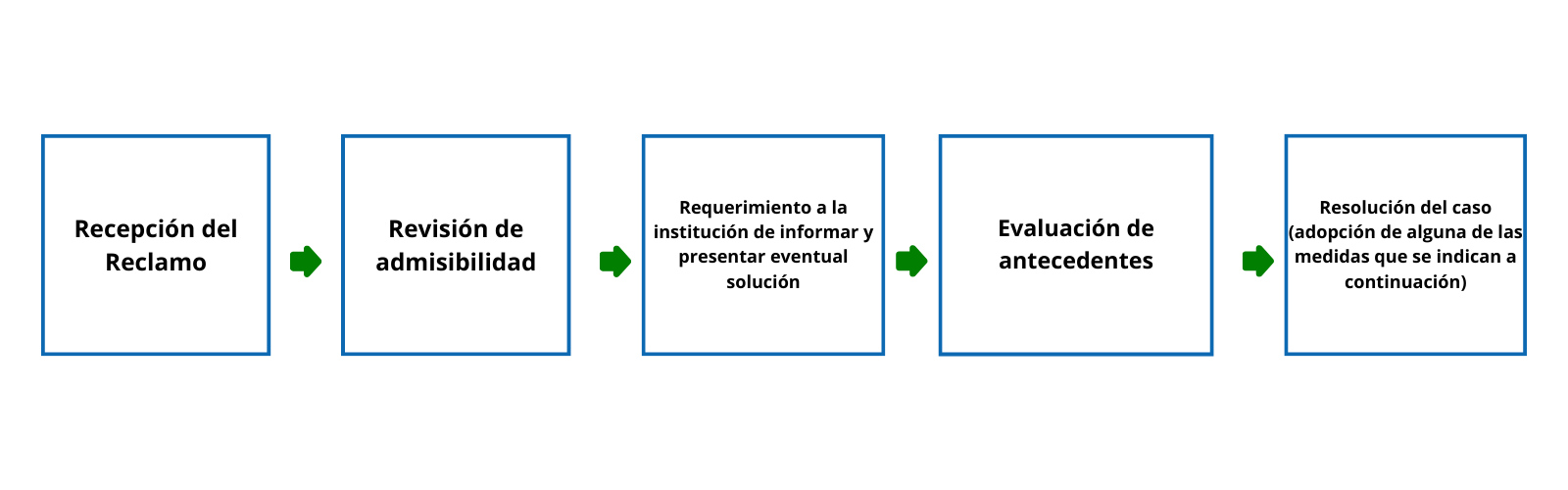
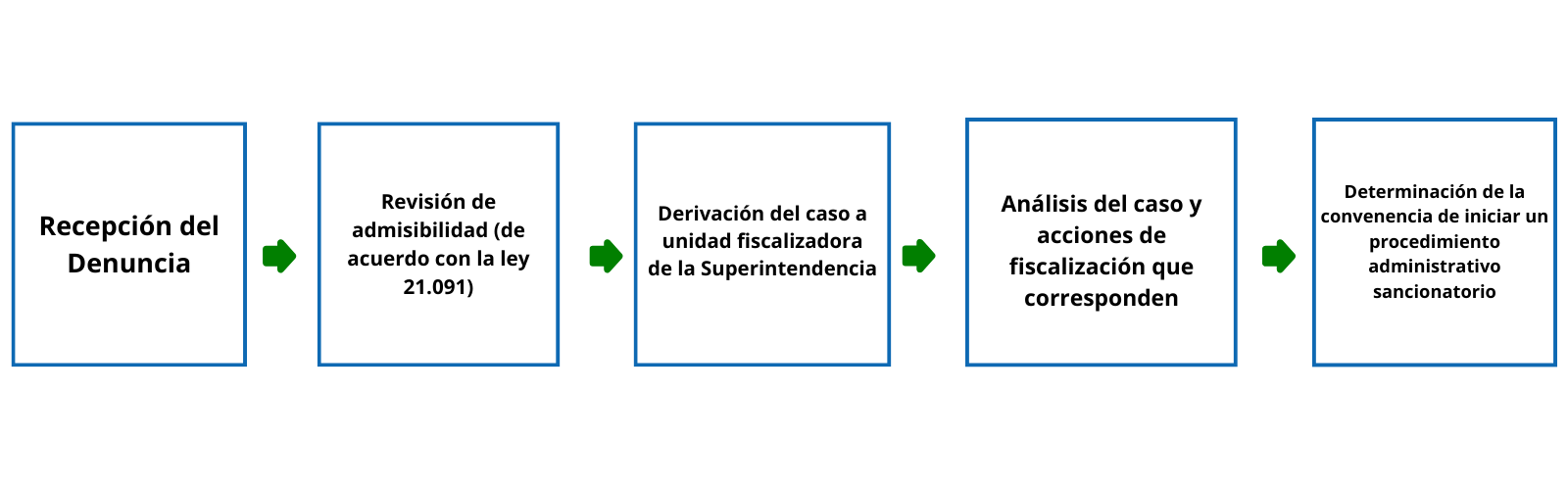
Once a claim or complaint is filed, the Superintendency of Higher Education has 15 business days to conduct a preliminary analysis of the case and determine the course of action. This may involve opening an inspection proceeding, acting as a mediator between the parties involved, referring the case to other competent bodies, or dismissing the case if it does not meet the criteria for processing.
Mediation is a process aimed at bringing the parties closer together, in which the Superintendence of Higher Education plays the role of interlocution and impartial counterpart, seeking to build bridges to resolve the problems that arise between the two parties in conflict. The premise behind a mediation process is that the parties are capable of finding a satisfactory solution to their differences by themselves, through a joint search for alternative solutions; all this process duly directed by an impartial mediator, as is the case with the Superintendence of Higher Education.
In the event that a satisfactory agreement cannot be reached between the parties in the mediation process, the complainant may proceed with their case through a formal complaint, provided they meet the established criteria. It will be the responsibility of the Superintendency of Higher Education to analyze the merits of the case and initiate the corresponding actions accordingly.
Through a complaint, an individual or group of individuals inform the Superintendency of a possible irregularity, with the aim that it investigates and adopts the appropriate measures.

 Obtaining academic background: certificates (notes, a regular student, ranking, recognition of hours, title, grade, and exit), plans and programmes, concentration notes
 Problems in the community institutional arising from violations of the internal regulations of the institutions
 Charges for removal or academic suspension, charging wrong.
 Benefits and/or grants student grants and loans)
 Misleading advertising
 Infrastructure or equipment, laboratories, computer support
 Application and admission selection test
 Comprehensive policy against sexual harassment, violence and gender discrimination


