Public attention: Moneda 975, 11th floor, Santiago, RM.
Hours of operation: Monday to Friday from 9:00 to 13:00 hours.
- Public attention: Moneda 975, 11th floor, Santiago, RM.
- Hours of operation: Monday to Friday from 9:00 to 13:00 hours.



The Superintendence of Higher Education is a public agency created by the Law N°21.091on Higher Education, oriented to oversee and supervigilar the enforcement of the legal provisions and regulations that regulate universities, professional institutes and centers of formation techniques of the country, as well as monitor because they devote their resources to the purposes for which they are themselves, according to the law and its statutes.
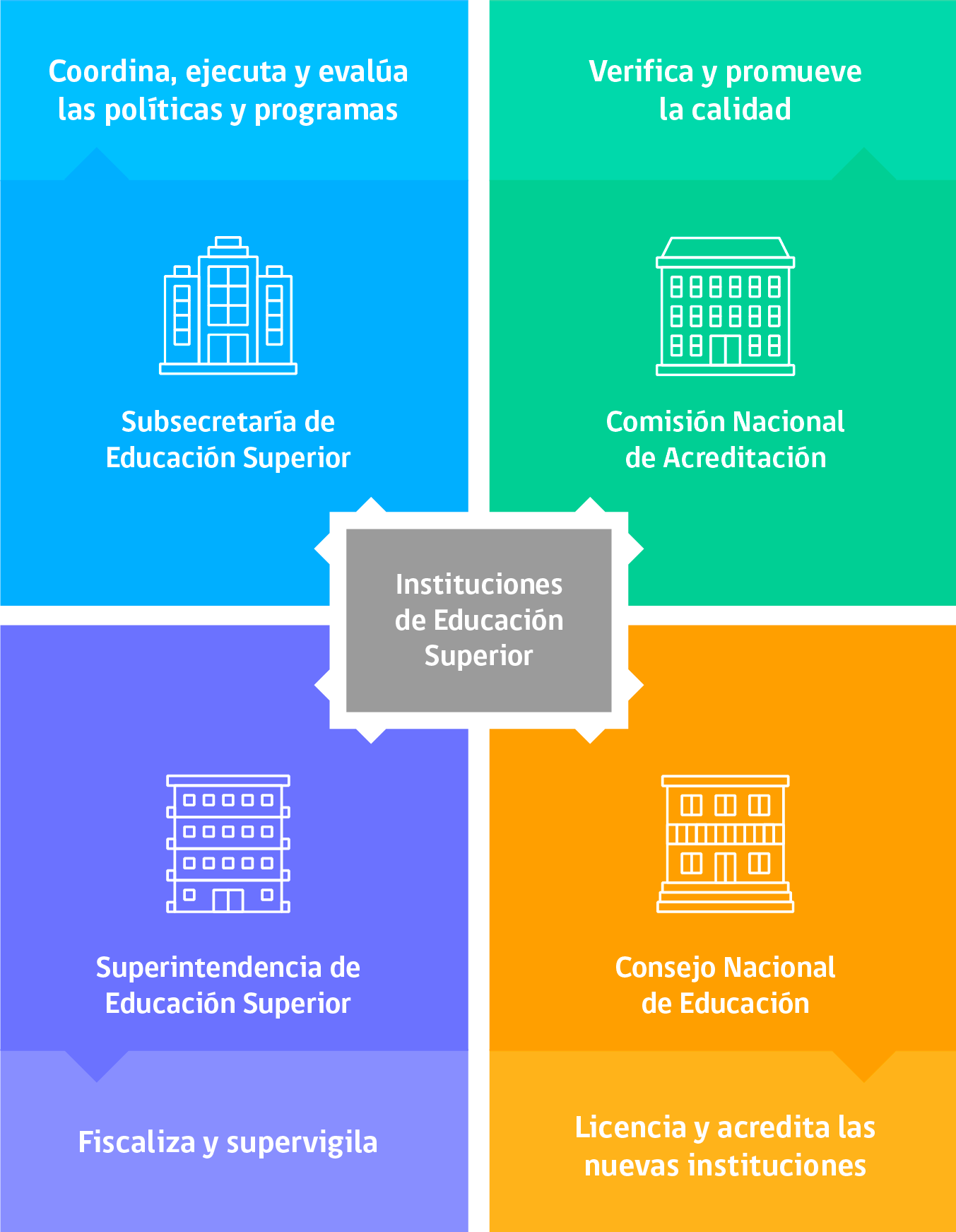
This institution was created as part of the National System of Quality Assurance of Higher Education, also composed by the Ministry of Education, the National Accreditation Commission and the National Council of Education.
This entity began its work in may 2019 and has as its purpose is to contribute to the improvement of the quality of education in higher education collaborating, along with the rest of the organs belonging to the System of Quality Assurance of Higher Education, to increase the transparency and trust that the people and citizenship in the system while protecting the public faith deposited by the company in the various institutions of higher education in the country.
In the exercise of its oversight role and oversight, Superintendence, respects the autonomy of institutions of higher education and the academic freedom that the Constitution and the law, cautelando and promoting the diversity of educational projects.
«The mission of the Superintendency of Higher Education is to contribute to ensuring the quality of higher education, by ensuring that the institutions within it comply with current regulations, use their resources efficiently, and effectively safeguard the right to education, through the oversight of their main processes, the handling of complaints and reports, the targeted support of entities facing risks, and the generation of relevant public information.».
"To be recognized by the various actors as an institution that, by putting the focus on people, in the quality of education and the increase of the trust, effectively contributes to, through the exercise of its functions to the stability and development of the higher education system as a whole."
This institution is part of the National system of Quality Assurance of Higher Education (SINACES), also composed by:
Undersecretariat of Higher Education Organ employee of the Ministry of Education in the development, coordination, implementation and evaluation of policies and programmes for higher education, especially in areas intended for development, promotion, internationalization and continuous improvement, both in the university subsystem as in the professional technician.
National Accreditation Commission Autonomous agency that verifies and promotes the quality of higher education. In its operation, has the powers, both in a general way, as other character-specific, relating to: the institutional accreditation; accreditation of careers and undergraduate programs; authorization of supervision and sanctions applicable to the accrediting agencies of careers and programs of undergraduate and graduate; and delivery information on the part of the institutions of higher education.
National Council of Education Autonomous body, develops the functions of the licensing of new institutions; it is the court of appeal of decisions of accreditation adopted by the National Accreditation Commission (CNA), and supports the Ministry of Education in the decisions of closure of institutions of higher education, both in licensing as autonomous.
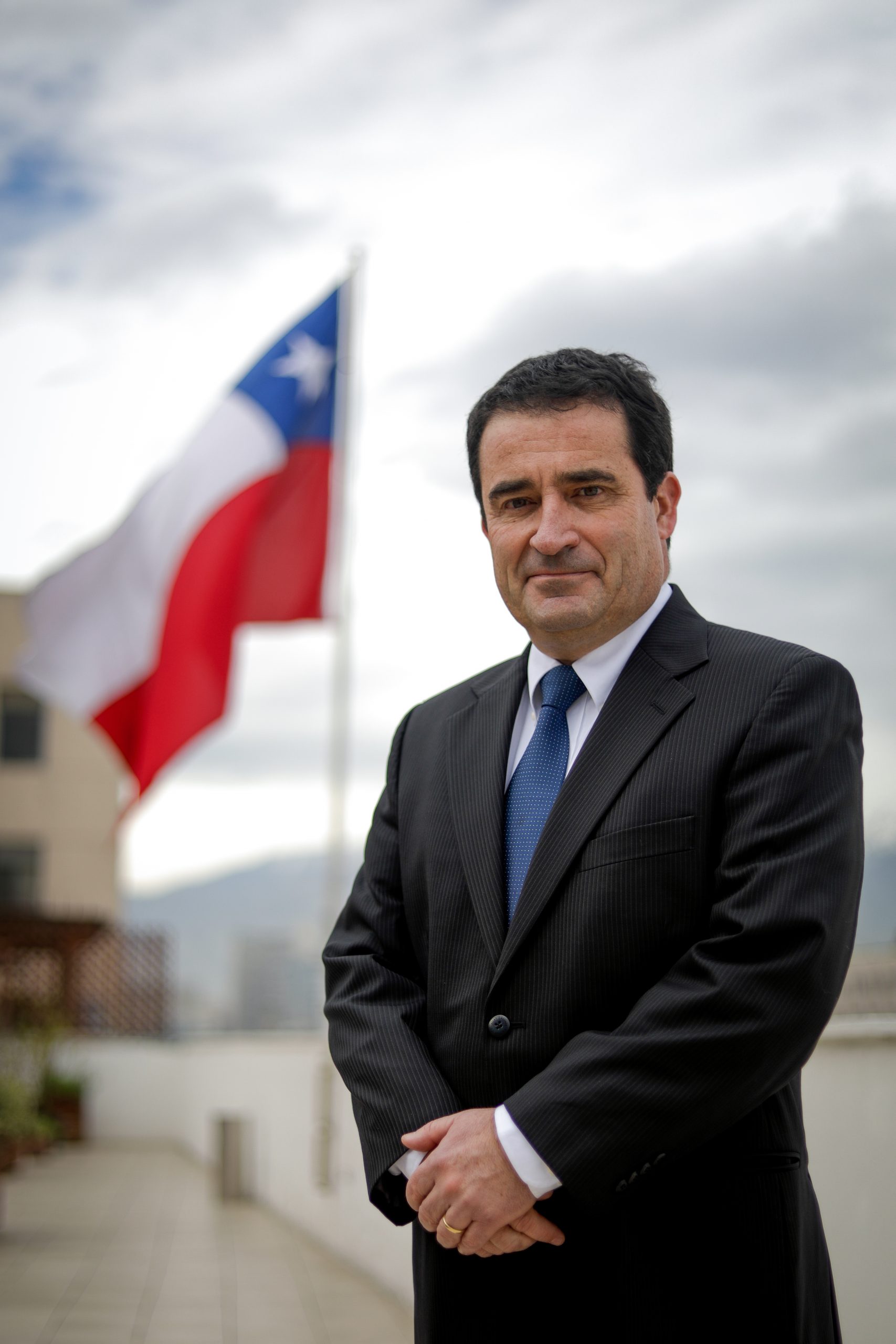
Francisco Achurra G. es abogado de la Universidad Diego Portales y Máster en Derecho de la Empresa de la Universidad de Los Andes.
Por casi 30 años se ha desempeñado prestando asesorías a entidades públicas y privadas en materias regulatorias, corporativas, judiciales y de cumplimiento normativo (compliance), ejerciendo por más de 15 años funciones de jefatura y dirección respecto de equipos de trabajo multidisciplinarios.
Entre junio de 2019 y febrero de 2023 se desempeñó como Fiscal de la Superintendencia de Educación Superior, formando parte del equipo responsable de implementar dicha entidad de control.
Francisco Achurra González
Daniella Maureira Arrizaga
Karla Escobar Parada
Valeria Aldana Schmeisser

Daniella Maureira Arrizaga

Karla Escobar Parada

Valeria Aldana Schmeisser
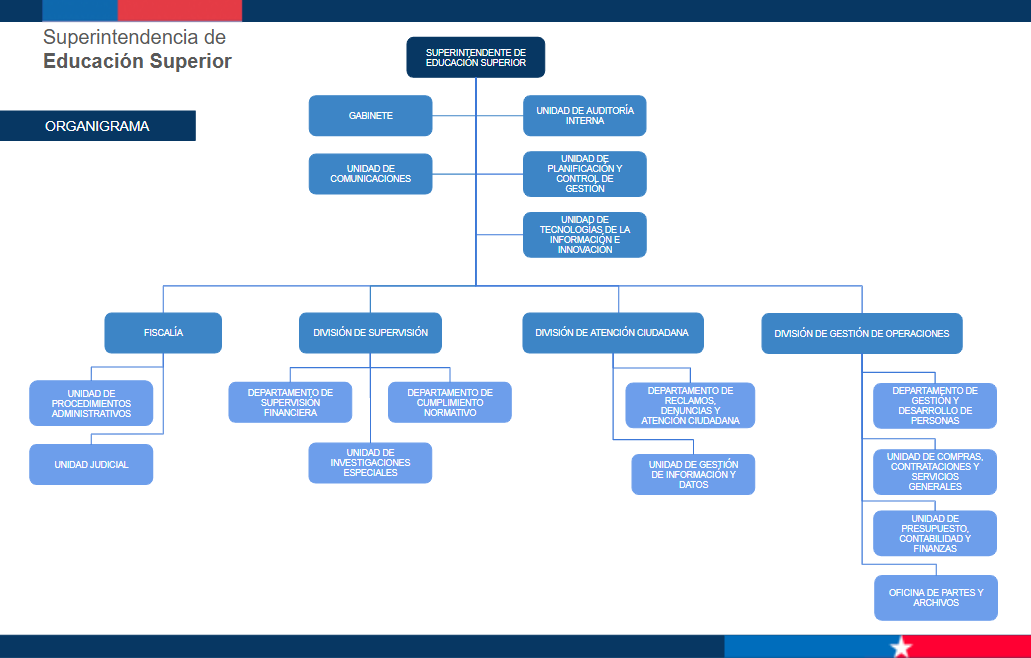
Responsible for articulating and supporting the relationship between divisions, departments, and units in resolving complex issues and implementing the action lines determined by the Superintendent.
Responsible for the generation and planning of dissemination and internal and external communication activities for the Superintendency.
Provide technical advice to the Superintendent, promote self-control mechanisms, evaluate and recommend improvements to the internal control system.
AExpert in budget management, plans the annual budget, manages incentive systems, oversees performance agreements, and tracks commitments. Collaborates on staffing reports, budget execution, and procedure manuals to improve internal processes of the Superintendency.
Promote efficient use of technological resources, coordinates projects, optimizes systems and databases, implements cybersecurity policies, ensures the functioning of platforms and services, and manages servers to ensure continuous operability. Identificar oportunidades de mejora a partir del análisis de procesos internos.
Provide ongoing legal advice to the Superintendent, divisions, departments, and units of the Superintendency, ensuring the legality of the institution's actions, as well as providing legal advice to both internal and external users on all matters pertaining to the service. Process disciplinary proceedings under Law No. 21,091 and administrative proceedings under Law No. 20,800 and propose the application of sanctions and respective measures to the Superintendent. Propose interpretations of educational regulations for the higher education sector and coordinate actions related to the judicial representation and defense of the service.
PIt proposes legal and administrative guidelines, prepares resolution projects for sanctioning or archiving procedures, coordinates processing, tracks deadlines, maintains a record of infractions, and approves administrative acts and contracts. It collaborates in the review of background and titles for contracts, and approves internal administrative acts of the Superintendency, ensuring legality in all processes.
CCoordinates the judicial processing of protection and claim appeals against resolutions of the Superintendent, prepares reports for Courts and appeals, systematizes judgments, processes illegality claims, advises on educational regulations, prepares responses to state entities, and coordinates labor, civil, and public procurement lawsuits, as well as those related to the civil liability of directors of higher education institutions.
CManages the achievement of goals and commitments, advises on their construction, monitors timelines, prepares management reports and indicators, participates in budget management, trains in specific areas, collaborates on technological projects, and advises on the efficiency of internal prosecutor's office processes, providing comprehensive support for the achievement of institutional objectives.
It is responsible for the planning, development, and control of supervision and inspection activities of higher education institutions and related individuals established by law, with the purpose of ensuring compliance with the laws and regulations of the higher education sector and the use of resources for their intended purposes in accordance with the law and their statutes. Design processes, instruments, and guidelines for supervision and oversight.
Elaboration and the design of the Supervision Model, processes, and plans. It carries out supervision and oversight actions to verify that institutions use their resources adequately. It oversees related-party transactions, analyzes essential facts, and evaluates the financial situation of institutions. Furthermore, it reviews accounting records, conducts audits, investigates violations, and collaborates in the design of circulars and procedures. It develops and monitors voluntary financial adjustment plans, ensuring their technical follow-up. It conducts investigations in accordance with Law 20,800.
RIt conducts targeted audits on resource usage, special investigations, and proposes the design of the accountability process for free tuition financing. Furthermore, it executes oversight actions for the University Loan Solidarity Fund, investigates according to Law No. 20,800, and supports the analysis of financial statements.
Evaluates and audits the financial situation of higher education institutions, analyzing their financial statements and proposing recommendations or voluntary adjustment plans. It supervises the correct execution of these plans, reviews audits and accounting, and prepares financial and regulatory reports for competent bodies. Additionally, it conducts audits and inspections related to the use of public resources and funds, ensuring compliance with regulations and the follow-up of institutional commitments.
Investigate and supervise compliance with recovery plans, provisional administration, and financial monitoring in accordance with Law 20,800, evaluating their progress. Coordinate with other units to develop and monitor these plans, as well as to follow up on institutional recommendations and commitments. Additionally, collaborate on oversight programs aimed at verifying regulatory compliance and the correct management of resources.
It has the authority to evaluate and manage complaints received or detected by the Oversight Division, determining their merit and proposing their closure or enforcement. It conducts audits and regulatory verification actions, designs standardized technical procedures and criteria, and coordinates processing with other competent units or entities. Furthermore, it drives improvements in management systems and tools, executes the monitoring of institutional commitments, and collaborates on enforcement programs and performance indicators. It contributes to the preparation of statistics, studies, and public reports, ensuring efficiency, traceability, and effectiveness in oversight.
The function consists of controlling the fulfillment of the Division's goals and commitments, advising on the definition of indicators, and preparing management reports. It includes monitoring times, budgets, and the follow-up of technological projects, as well as audit recommendations. Additionally, it provides technical and strategic support to management to optimize internal processes and improve their efficiency.
Receives and reviews the admissibility of claims and complaints against higher education institutions, managing prior information and referrals as appropriate. When warranted, conducts mediation processes to resolve conflicts between claimants and institutions. Additionally, handles community inquiries, reports serious cases or rights violations to management, and forwards relevant background information to competent units for oversight.
Elaboration and design of the Supervision Model, processes, and plans. It carries out supervision and oversight actions to verify compliance with educational regulations, ensuring that institutions use their resources appropriately. It oversees related-party transactions, analyzes essential facts, and evaluates the financial situation of institutions. Furthermore, it reviews accounting records, conducts audits, investigates violations, and collaborates in the design of circulars and procedures. The Division promotes internal coordination and executes focused oversight processes.
RIt conducts targeted audits on resource usage, special investigations, and proposes the design of the accountability process for free tuition financing. Furthermore, it executes oversight actions for the University Loan Solidarity Fund, investigates according to Law No. 20,800, and supports the analysis of financial statements.
SOversees the implementation of recommendations from the Oversight Division by higher education institutions. Coordinates preventive oversight, supervises financial commitments and recovery plans under Law No. 20,800, and supports the analysis and monitoring of financial statements.
It is responsible for efficiently administering and overseeing the physical, financial, accounting, budgetary, human, technological, strategic planning, and management control resources of the Superintendency. Promote and implement policies and measures aimed at their efficient use, ensuring that the support provided internally responds to the needs of the service and meets the standards of efficiency, timeliness, and quality, based on institutional guidelines and current legal provisions, contributing to the fulfillment of strategic plans and safeguarding the institution's assets. Formulate, execute, and control the annual budget of the service, in accordance with strategic definitions and in coordination with the other divisions, departments, and units of the institution.
GChallenges the employment cycle and relevant events, advises on procedures and regulations, generates information for institutional decisions, implements grading and evaluation systems, directs recruitment and training processes, promotes organizational climate, safety, and quality of work life. Fosters innovative initiatives, engages in dialogue with employees, projects budgets, manages payroll, and prepares reports for public bodies when necessary.
AManages the Accounting Financial System, ensuring adequate budgetary records. Prepares financial reports, executes payments, manages public procurement, oversees service contracts, and plans vendor payments. Additionally, coordinates the asset inventory system in accordance with current regulations.
Rregisters, supervises, and distributes official documents, maintains secure physical archives, collaborates with other divisions, uses digital platforms for government communication, and manages paper document archives.
It is responsible for coordinating and managing the information exchange processes with higher education institutions, as well as administering the IT platforms on which said processes are carried out. Prepare reports, briefings, and studies that promote evidence-based decision-making by the Superintendency, adhering to quality standards and methodological rigor. Publish reports, briefings, and studies to inform relevant stakeholders and the public about the Superintendency's activities and impact on the sector, as well as the main trends and developments in Chilean higher education. Consolidate, record, and keep updated the information generated in the application processes for higher education institutions.
CCoordinate reports for the National System for Quality Assurance in Higher Education (SINACES) bodies, manage requests and information platforms, consolidate data, provide internal information, report regulatory non-compliance to the Prosecutor's Office, lead data governance initiatives, develop compliance metrics, and support higher education institutions' capabilities. Additionally, propose alliances with public bodies to fulfill the Superintendent's functions.
EWorks with indices, statistics, and studies to support decisions. Develops and updates business intelligence, promotes technological innovation, and disseminates information on the website. Evaluate the impact of regulatory actions, conduct periodic studies in key areas of Chilean higher education, and contribute to data- and evidence-based decision-making.
The Superintendence of Higher Education is a public body created by Law No. 21,091, on Higher Education, tasked with overseeing and supervising compliance with the legal and regulatory provisions governing universities, professional institutes, and technical training centers in the country, as well as ensuring that they allocate their resources to their intended purposes, in accordance with the law and their statutes.
This institution was created as part of the National System of Quality Assurance of Higher Education, also composed by the Ministry of Education, the National Accreditation Commission and the National Council of Education.
The purpose of this new oversight body is to contribute to the improvement of the quality of higher education by collaborating with other bodies in the system to increase transparency and public trust in institutions, while safeguarding the public faith that society places in them.
The main functions of the Superintendency of Higher Education, operationalized in the strategic objectives it has set for itself, are as follows:
To carry out its oversight tasks, the Superintendence has the following powers, among others:
Require higher education institutions to provide information regarding their financial and asset situation, the composition of their administrative and governing bodies, agreements and conventions entered into with related entities, and other essential facts that may strategically affect the institution.
Cite the members of the administrative and governing bodies, as well as the senior authorities of the institution.
Request clarifying information from higher education institutions for the proper management of complaint and grievance applications.
Forward the background to other public agencies (SERNAC, Directorate of Labor, Public Ministry, SII, etc.) for cases of complaints and allegations that fall outside their scope of competence.
Establish sanctioning processes and apply fines to higher education institutions, when appropriate.
To attend the higher education institution's facilities to monitor their operations on-site.
In situations of serious non-compliance by the controllers of an institution of higher education, appoint a provisional administrator to manage it and evaluate its academic and financial viability.
The Superintendency of Higher Education has an electronic form on its website, www.sesuperior.cl, where all complaints and/or reports are entered. Users must register by entering their personal and contact information. When submitting your complaint or report, you must include, with the greatest possible detail, the background of the case and attach all information considered relevant to aid in its processing.
Once a claim or complaint is filed, the Superintendency of Higher Education has 15 business days to conduct a preliminary analysis of the case and determine the course of action. This may involve opening an inspection proceeding, acting as a mediator between the parties involved, referring the case to other competent bodies, or dismissing the case if it does not meet the criteria for processing.
Mediation is a process aimed at bringing the parties closer together, in which the Superintendence of Higher Education plays the role of interlocution and impartial counterpart, seeking to build bridges to resolve the problems that arise between the two parties in conflict. The premise behind a mediation process is that the parties are capable of finding a satisfactory solution to their differences by themselves, through a joint search for alternative solutions; all this process duly directed by an impartial mediator, as is the case with the Superintendence of Higher Education.
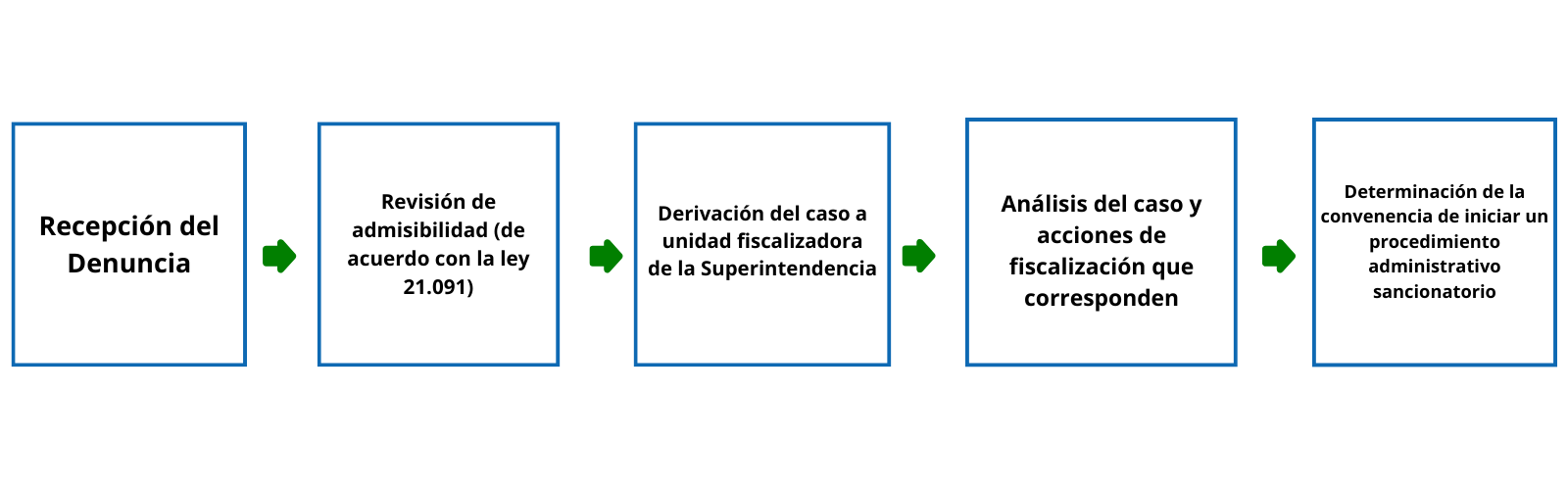
In the event that a satisfactory agreement cannot be reached between the parties in the mediation process, the complainant may proceed with their case through a formal complaint, provided they meet the established criteria. It will be the responsibility of the Superintendency of Higher Education to analyze the merits of the case and initiate the corresponding actions accordingly.
Through a complaint, an individual or group of individuals inform the Superintendency of a possible irregularity, with the aim that it investigates and adopts the appropriate measures.
The Superintendence of Higher Education is a public agency created by the law N° 21.091on Higher Education, oriented to oversee and supervigilar the enforcement of the legal provisions and regulations that regulate universities, professional institutes and centers of formation techniques of the country, as well as monitor because they devote their resources to the purposes for which they are themselves, according to the law and its statutes.
This institution was created as part of the National System of Quality Assurance of Higher Education, also composed by the Ministry of Education, the National Accreditation Commission and the National Council of Education.
This entity began its work in may 2019 and has as its purpose is to contribute to the improvement of the quality of education in higher education collaborating, along with the rest of the organs belonging to the System of Quality Assurance of Higher Education, to increase the transparency and trust that the people and citizenship in the system while protecting the public faith deposited by the company in the various institutions of higher education in the country.
In the exercise of its oversight role and oversight, Superintendence, respects the autonomy of institutions of higher education and the academic freedom that the Constitution and the law, cautelando and promoting the diversity of educational projects.
«The mission of the Superintendency of Higher Education is to contribute to ensuring the quality of higher education, by ensuring that institutions comply with current regulations, make correct use of their financial resources, and fulfill the agreed-upon conditions in their various educational offerings, through oversight, support, and the production of public information for the various stakeholders in higher education.
"To be recognized by the various actors as an institution that, by putting the focus on people, in the quality of education and the increase of the trust, effectively contributes to, through the exercise of its functions to the stability and development of the higher education system as a whole."
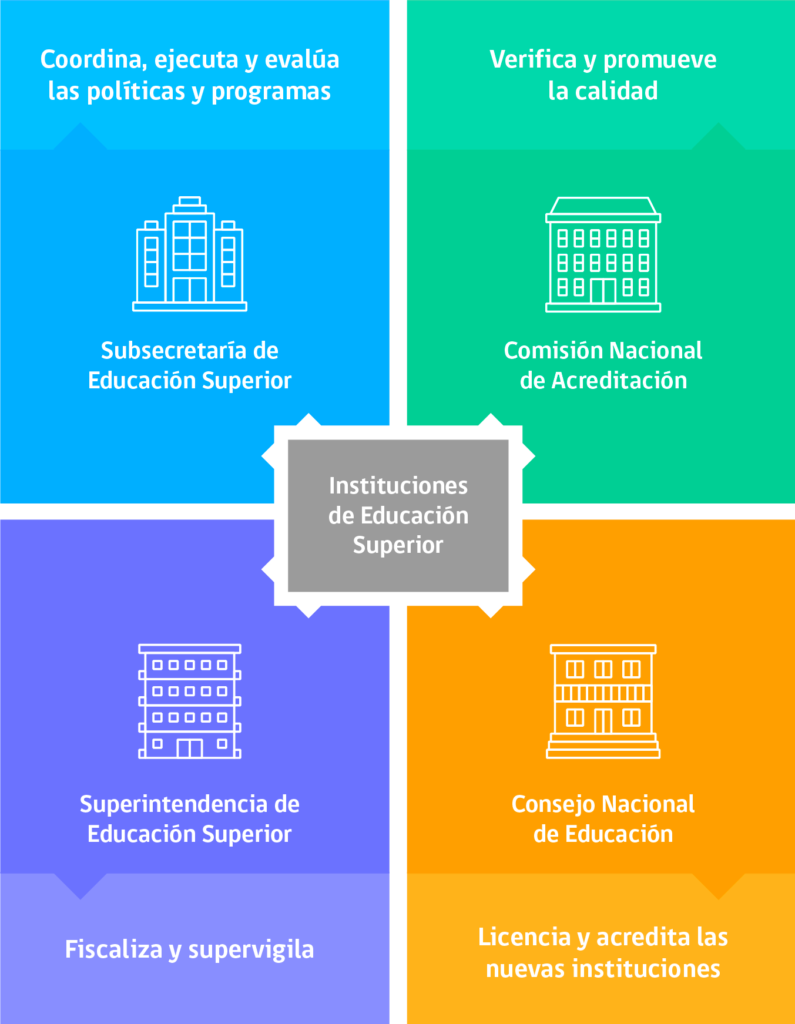
This institution is part of the National system of Quality Assurance of Higher Education (SINACES), also composed by:
Undersecretariat of Higher Education Organ employee of the Ministry of Education in the development, coordination, implementation and evaluation of policies and programmes for higher education, especially in areas intended for development, promotion, internationalization and continuous improvement, both in the university subsystem as in the professional technician.
National Accreditation Commission Autonomous agency that verifies and promotes the quality of higher education. In its operation, has the powers, both in a general way, as other character-specific, relating to: the institutional accreditation; accreditation of careers and undergraduate programs; authorization of supervision and sanctions applicable to the accrediting agencies of careers and programs of undergraduate and graduate; and delivery information on the part of the institutions of higher education.
National Council of Education Autonomous body, develops the functions of the licensing of new institutions; it is the court of appeal of decisions of accreditation adopted by the National Accreditation Commission (CNA), and supports the Ministry of Education in the decisions of closure of institutions of higher education, both in licensing as autonomous.

The claim it is the request to the Superintendent for this to intervene as a mediator in the dispute existing between the complainant and any of the institutions of higher education are controlled.
 Propose an alternative solution to the particular problem of the claimant in the event of a mediation that instruct the Superintendent.
I am the person concerned or the I represent
I have a problem that I have not been able to resolve with an Institution of Higher Education. I have a history to prove the problem (emails, audios, texts, documents, formal, etc..) with the institution of higher education.
Propose an alternative solution to the particular problem of the claimant in the event of a mediation that instruct the Superintendent.
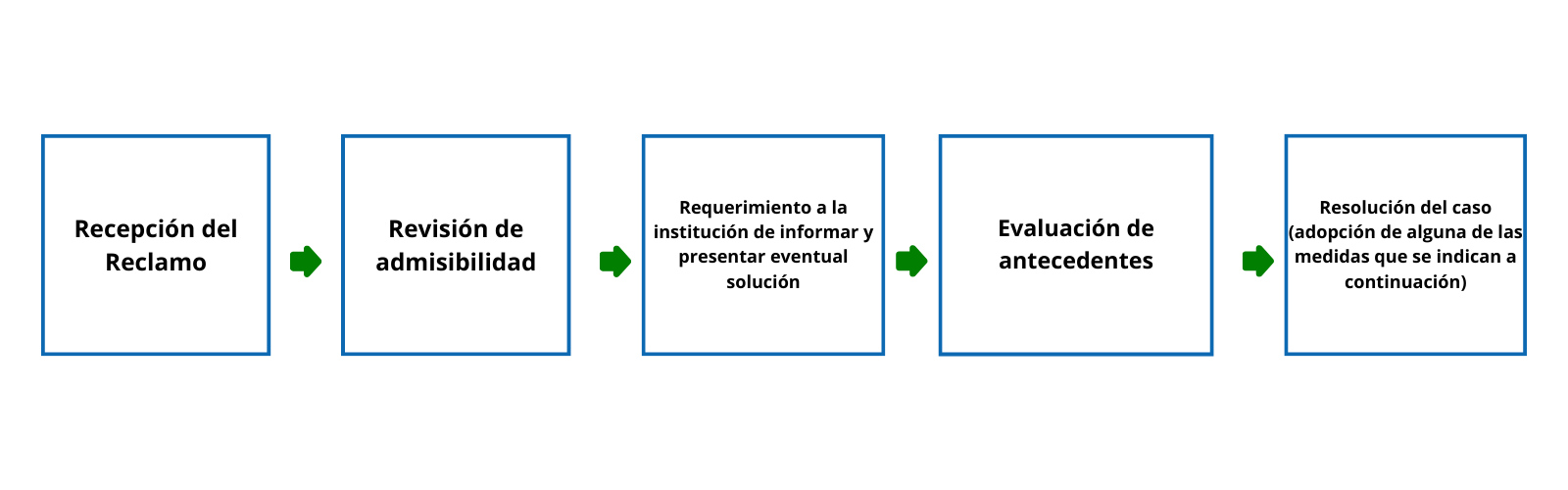
The Complaint it is the act by which informs the Superintendency of a potential irregularity, with the object that this Investigate and take appropriate action
Apply by the Superintendence sanctions
apply in accordance with the law.
It is important to consider that the complaint does NOT pursue a
solution to the particular problem of the complainant
I am the person concerned or the I represent.I want or do NOT want to reveal my identity (If the option is NOT you will be contacted by a member of the SES to lift or ratify such reserve).I can describe the specific facts constituting a violation, the date and place in which they occurred.If possible, I will identify the alleged infringer (faculty, students, administrative authority, etc).
Under the categories of complaints:
 Obtaining academic background: certificates (notes, a regular student, ranking, recognition of hours, title, grade, and exit), plans and programmes, concentration notes
 Problems in the community institutional arising from violations of the internal regulations of the institutions
 Charges for removal or academic suspension, charging wrong.
 Benefits and/or grants student grants and loans)
 Misleading advertising
 Infrastructure or equipment, laboratories, computer support
 Application and admission selection test
 Comprehensive policy against sexual harassment, violence and gender discrimination
 Breaches in the area of school Education
 Application and renewal of scholarships allocated by the Ministry of Education
 Higher education institutions are not officially recognized by the State
 Requirements in closed institutions
 Labour issues
 Tuition associated with immigration documentation