Public attention: Moneda 975, 11th floor, Santiago, RM.
Hours of operation: Monday to Friday from 9:00 to 13:00 hours.

First COSOC meeting is called following the election of its counselors.

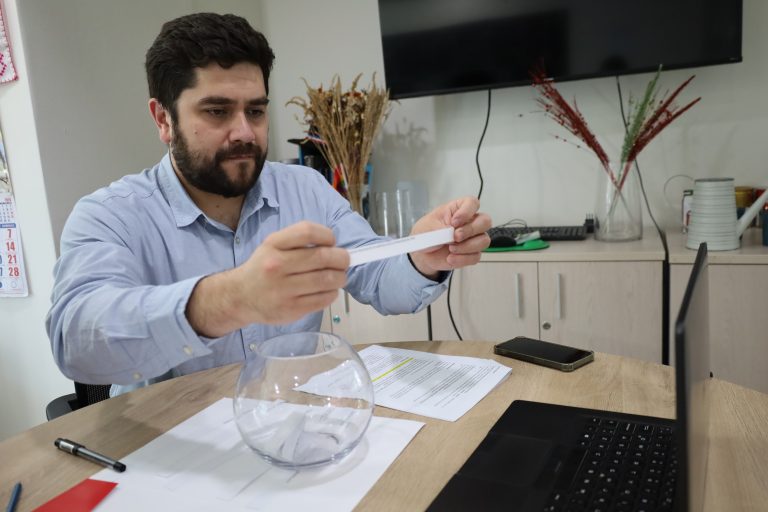
This Wednesday, December 17, the draw was held to select six members of the first Civil Society Council (COSOC) of the Superintendency of Higher Education. This consultative, deliberative, and non-binding body will strengthen citizen participation mechanisms in the institutional work.

The elected individuals are as follows:

Academic organizations

  • Camilo Peña (Association of Academic Officials of the University of Playa Ancha)
  • Reiner Hollander (Association of Academics, University of Bío-Bío, Concepción)
  • Jonás Chnaiderman (National Association of Academics of the University of Chile)

Student organizations

  • Bastián Becker (Federation of Students of the Diego Portales University)

Non-Academic Staff Organizations

  • Miguel Oyarzún (Workers' Union of the Universidad Católica Silva Henríquez)

Civil Society

  • Leopoldo Ramírez (Council of Professional Institutes and Accredited Technical Training Centers)

The first SES COSOC meeting has been scheduled for next Tuesday, December 23rd, at 3:00 PM, and will be held in a hybrid format (in-person and remote).

The occasion will serve for the counselors to introduce themselves and for the election of the board's presidency to take place.

Here you can review the raffle video.

Share news:

Enter your case

Edit Content

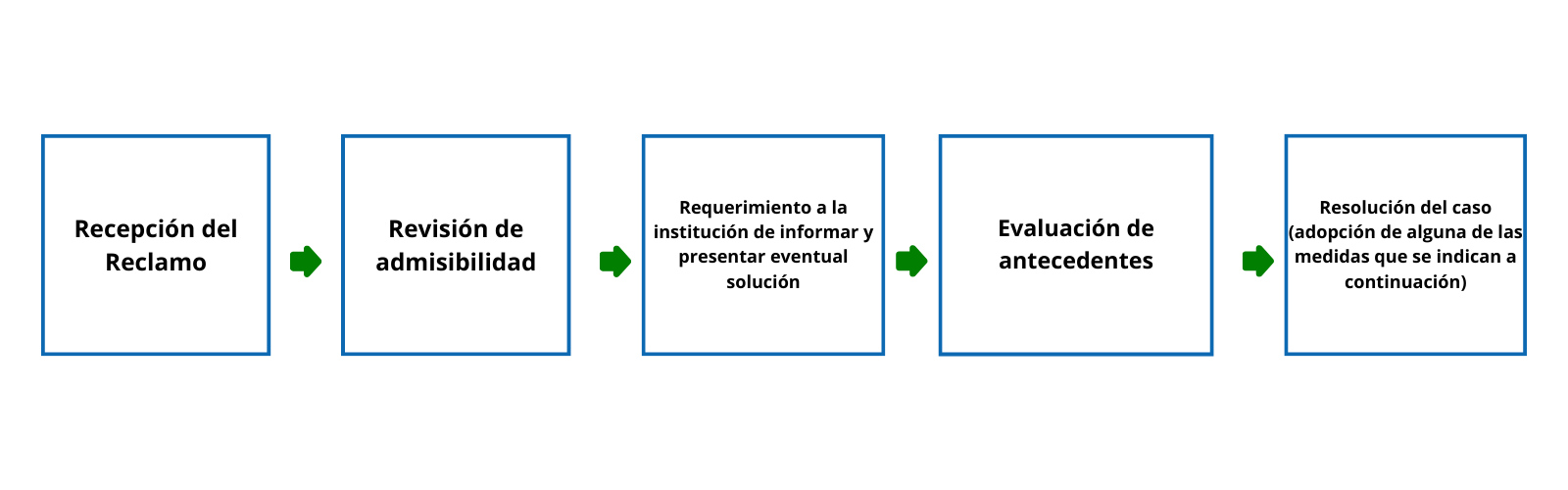
CLAIM

The claim it is the request to the Superintendent for this to intervene as a mediator in the dispute existing between the complainant and any of the institutions of higher education are controlled. 

Purpose of the Claim:

Propose an alternative solution to the particular problem of the claimant in the event of a mediation that instruct the Superintendent.

To file a claim, what should I consider?

I am the person concerned or the I represent

I have a problem that I have not been able to resolve with an Institution of Higher Education.
I have a history to prove the problem (emails, audios, texts, documents, formal, etc..) with the institution of higher education.

Propose an alternative solution to the particular problem of the claimant in the event of a mediation that instruct the Superintendent.

Claim Stages

Edit Content

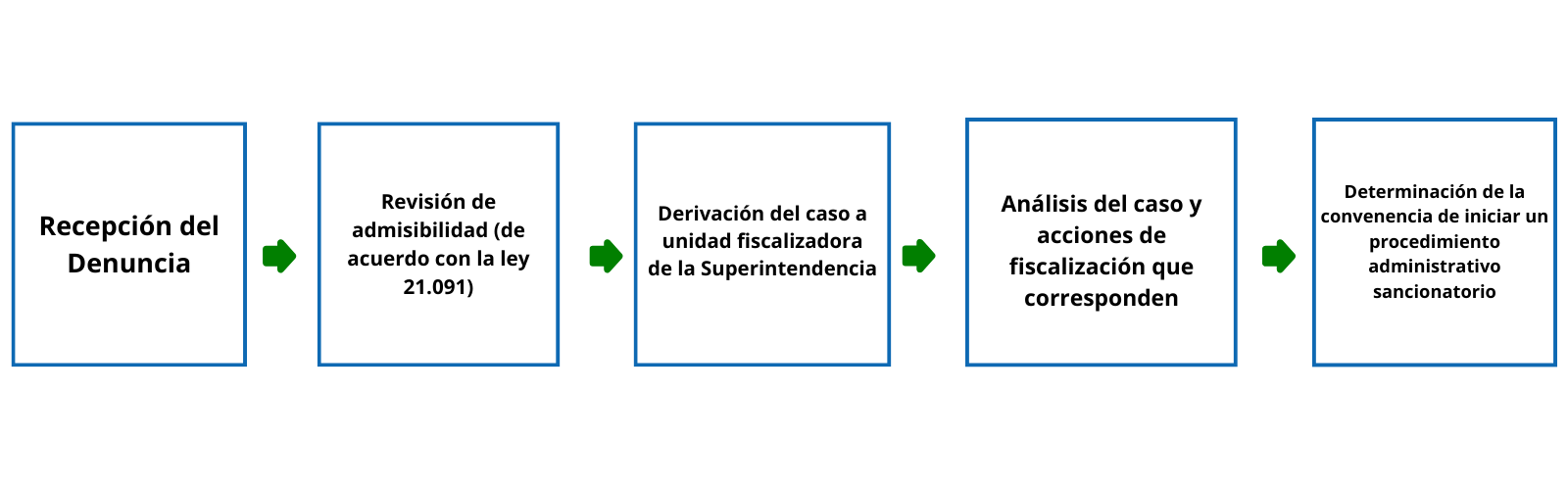
COMPLAINT:

The Complaint it is the act by which informs the Superintendency of a potential irregularity, with the object that this Investigate and take appropriate action

Purpose of the Complaint:

Apply by the Superintendence sanctions
apply in accordance with the law.

It is important to consider that the complaint does NOT pursue a
solution to the particular problem of the complainant

To file a complaint, what should I consider?

I am the person concerned or the I represent.

I want or do NOT want to reveal my identity (If the option is NOT you will be contacted by a member of the SES to lift or ratify such reserve).

I can describe the specific facts constituting a violation, the date and place in which they occurred.

If possible, I will identify the alleged infringer (faculty, students, administrative authority, etc).

Stages of the complaint

What types of complaints fall under SES jurisdiction?

Under the categories of complaints: 

Obtaining academic background: certificates (notes, a regular student, ranking, recognition of hours, title, grade, and exit), plans and programmes, concentration notes

Problems in the community institutional arising from violations of the internal regulations of the institutions 

Charges for removal or academic suspension, charging wrong.

Benefits and/or grants student grants and loans) 


    Misleading advertising 
   Infrastructure or equipment, laboratories, computer support 

    Application and admission selection test 

    Comprehensive policy against sexual harassment, violence and gender discrimination 

What types of complaints are not within the SES's jurisdiction?

  Breaches in the area of school Education 

  Application and renewal of scholarships allocated by the Ministry of Education

 Higher education institutions are not officially recognized by the State

 Requirements in closed institutions 

 Labour issues

  Tuition associated with immigration documentation