Public attention: Moneda 975, 11th floor, Santiago, RM.
Hours of operation: Monday to Friday from 9:00 to 13:00 hours.

Ley que regula acoso sexual en educación superior: SES entrega orientaciones a casas de estudios

El 15 de septiembre de 2021 fue publicada la ley que regula el acoso sexual, la violencia y discriminación de género en el ámbito de la educación superior. Desde entonces, las instituciones cuentan con el plazo de un año para tener una política integral en esta materia, con modelos de prevención y de sanción de dichas conductas, elaborados de manera participativa.

En concreto, las instituciones de educación superior deberán cumplir al próximo 15 de septiembre de 2022 con los siguientes requisitos: contar con una política integral contra el acoso sexual, la violencia y la discriminación de género, la que deberá contemplar dos modelos: uno de prevención y otro de investigación y sanción. Además, cada uno de estos modelos deberá contar con unidades de implementación, y de investigación y sanción, separadas, integradas por personal capacitado en derechos humanos y perspectiva de género, dotadas de recursos humanos, presupuesto suficiente y facultades para el efectivo cumplimiento de sus respectivas tareas.

En cuanto a las medidas de difusión, además tendrán un año contado desde la implementación de sus modelos.

La normativa también fijó que la Superintendencia de Educación Superior (SES) sea la competente para sancionar el incumplimiento de las obligaciones contenidas en dicha legislación. Es decir, le compete fiscalizar y supervisar que las instituciones implementen oportunamente esos instrumentos; que cuenten con las unidades responsables correspondientes; y que adopten las medidas de capacitación y difusión exigidas en la mencionada ley.

Para ver información revisa la nota publicada por Emol aquí https://bit.ly/3onVgpK

Share news:

Enter your case

Edit Content

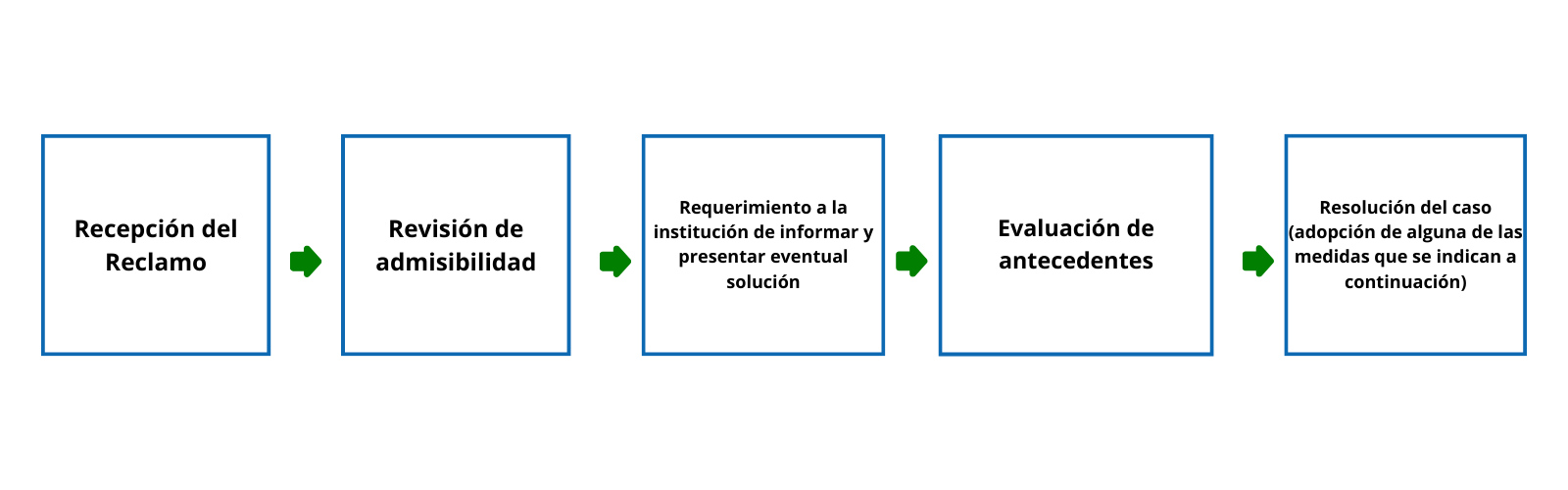
CLAIM

The claim it is the request to the Superintendent for this to intervene as a mediator in the dispute existing between the complainant and any of the institutions of higher education are controlled. 

Purpose of the Claim:

Propose an alternative solution to the particular problem of the claimant in the event of a mediation that instruct the Superintendent.

To file a claim, what should I consider?

I am the person concerned or the I represent

I have a problem that I have not been able to resolve with an Institution of Higher Education.
I have a history to prove the problem (emails, audios, texts, documents, formal, etc..) with the institution of higher education.

Propose an alternative solution to the particular problem of the claimant in the event of a mediation that instruct the Superintendent.

Claim Stages

Edit Content

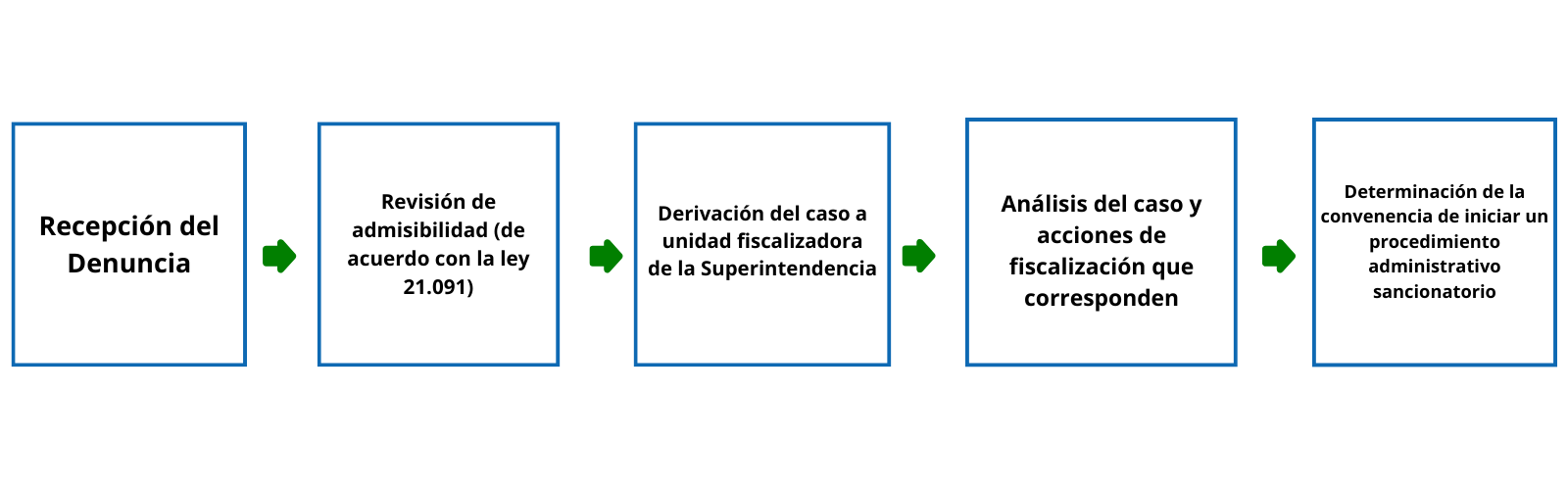
COMPLAINT:

The Complaint it is the act by which informs the Superintendency of a potential irregularity, with the object that this Investigate and take appropriate action

Purpose of the Complaint:

Apply by the Superintendence sanctions
apply in accordance with the law.

It is important to consider that the complaint does NOT pursue a
solution to the particular problem of the complainant

To file a complaint, what should I consider?

I am the person concerned or the I represent.

I want or do NOT want to reveal my identity (If the option is NOT you will be contacted by a member of the SES to lift or ratify such reserve).

I can describe the specific facts constituting a violation, the date and place in which they occurred.

If possible, I will identify the alleged infringer (faculty, students, administrative authority, etc).

Stages of the complaint

What types of complaints fall under SES jurisdiction?

Under the categories of complaints: 

Obtaining academic background: certificates (notes, a regular student, ranking, recognition of hours, title, grade, and exit), plans and programmes, concentration notes

Problems in the community institutional arising from violations of the internal regulations of the institutions 

Charges for removal or academic suspension, charging wrong.

Benefits and/or grants student grants and loans) 


    Misleading advertising 
   Infrastructure or equipment, laboratories, computer support 

    Application and admission selection test 

    Comprehensive policy against sexual harassment, violence and gender discrimination 

What types of complaints are not within the SES's jurisdiction?

  Breaches in the area of school Education 

  Application and renewal of scholarships allocated by the Ministry of Education

 Higher education institutions are not officially recognized by the State

 Requirements in closed institutions 

 Labour issues

  Tuition associated with immigration documentation