

An important instrument that the law provides us for fulfilling our mission is the regulatory power, which allows us to contribute to providing legal certainty to educational institutions and their communities in various relevant matters. On this point, we would like to highlight the usefulness of this tool in addressing situations that put pressure on the system, such as those that have occurred recently, serving as a guide for the fulfillment of their legal obligations and to supplement certain provisions of the Law whose interpretation is not entirely clear.
In this area, I would like to highlight the instructions regarding the meaning and scope of force majeure in higher education, which constituted the first specific administrative regulatory tool on this matter in higher education. A second circular was added to this, which complemented the instructions given in the context of the health emergency caused by COVID-19.
I would also like to refer to two general application standard projects that were worked on during this first year of operation, with the aim of facilitating compliance by institutions with certain matters contained in the law. The first of these establishes the definitions, procedures, deadlines, and mechanisms that will be used for higher education institutions to comply with their legal obligation to provide information. I am referring particularly to financial information; on acts, agreements, and operations carried out with related parties; information on their partners, associates, and directors; on the participation of institutions in related entities; information on donations; essential facts; on the controller, among others.
The second corresponds to the accounting standards for state higher education institutions, a document that is being worked on in conjunction with the Office of the Comptroller General of the Republic.
Finally, it is worth highlighting that throughout this year, various pronouncements have been issued on specific matters consulted by higher education institutions, with the aim of guiding them and providing a correct interpretation of the regulations within our purview.
To increase confidence in the system, one of our main concerns is to broaden the levels of transparency in the higher education system. Along these lines, we published the first public registry of partners and associates of higher education institutions, as well as the first public registry of administrators of the country's educational institutions, both made available to the public on our institutional website. In turn, we published the financial statements of all institutions, so that the general community can be informed about their financial situation.
Chapters
Message – Startup – Quality – Confidence – Focus on People


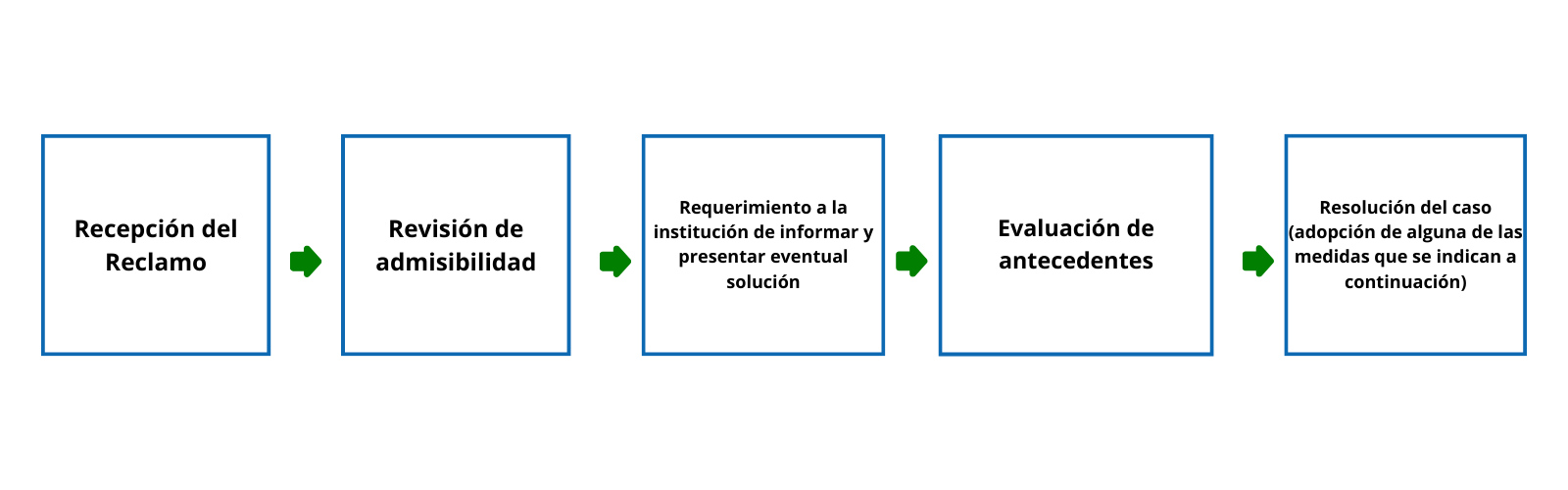
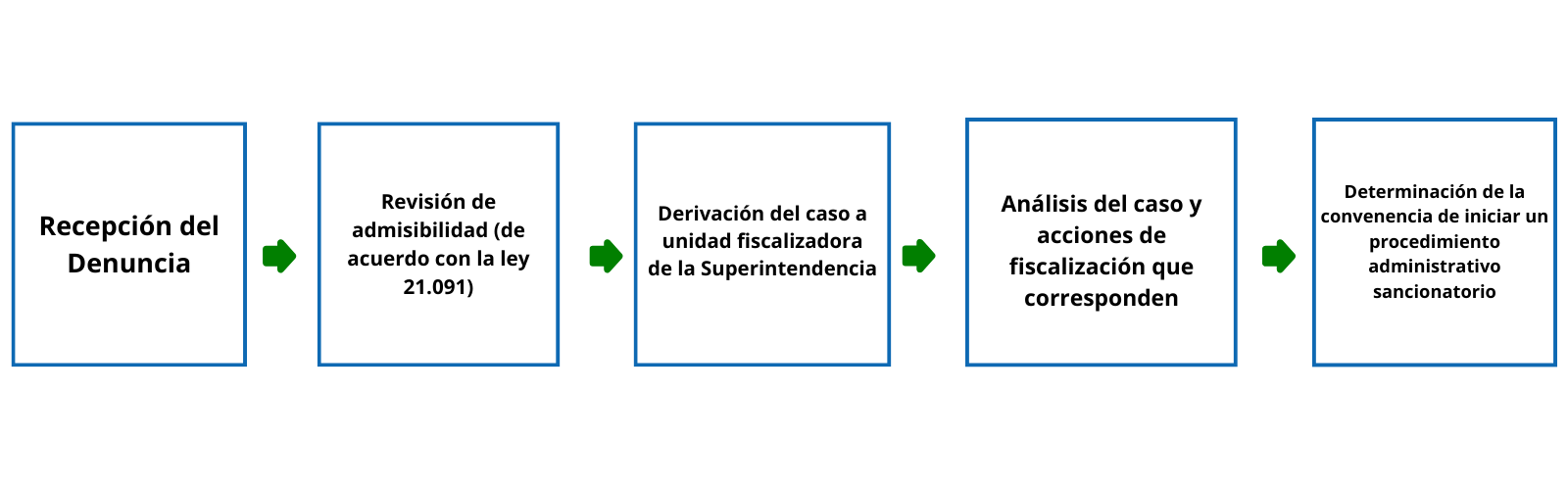
 Obtaining academic background: certificates (notes, a regular student, ranking, recognition of hours, title, grade, and exit), plans and programmes, concentration notes
 Problems in the community institutional arising from violations of the internal regulations of the institutions
 Charges for removal or academic suspension, charging wrong.
 Benefits and/or grants student grants and loans)
 Misleading advertising
 Infrastructure or equipment, laboratories, computer support
 Application and admission selection test
 Comprehensive policy against sexual harassment, violence and gender discrimination


