Public attention: Moneda 975, 11th floor, Santiago, RM.
Hours of operation: Monday to Friday from 9:00 to 13:00 hours.

SES makes the Report and Database of the 2024 Financial Health Study of Higher Education in Chile available to the public.

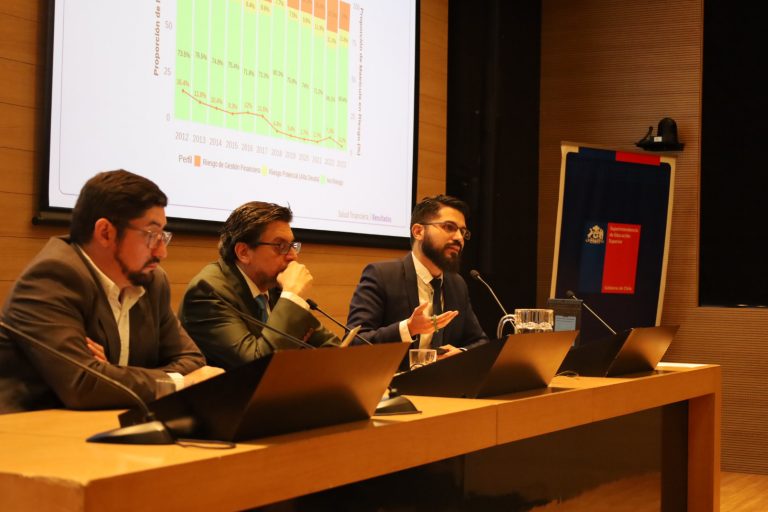
In early December, The Superintendency of Higher Education (SES) made the results of öffentlichen bekannt Second Report of the Study on the Financial Health of the Higher Education System in Chile, a study that reported, among its main conclusions, that the number of students enrolled in institutions classified in the high-risk profile had decreased compared to the previous review.


On this occasion, Superintendent José Miguel Salazar emphasized that this second study confirms that “the higher education system in Chile continues to show good financial health.”.


As of today, the Superintendency makes available to researchers, academics, higher education managers, and the general public Final study report and database with which it was developed in order to contribute to generating a better public discussion about the present and future of our higher education.


The study analyzed a total of 126 institutions of higher education with active enrollment in 2024, including 55 universities, 31 Professional Institutes (IP) y 40 Technical Training Centers (CFT).


The data sources used include the audited financial statements from 2012 to 2023, the Uniform Coded Standardized Form (FECU) from the same period, and the 2020-2023 Free Tuition Revenue Statement, information provided by the HEIs to the SES. In addition, information from Higher Education Information System (SIES), such as the historical compendium of higher education financing, undergraduate enrollment, retention rates, among others, and the financing database of the Comptroller General of the Republic (CGR). Descriptive and advanced statistical analysis techniques were used, such as latent profiles, logistic regression models, and difference-in-differences analysis to estimate causal effects.


Database information may differ minimally from the results published in this report, due to adjustments and updates to the 2023 Financial Statements.
Share news:

Enter your case

Edit Content

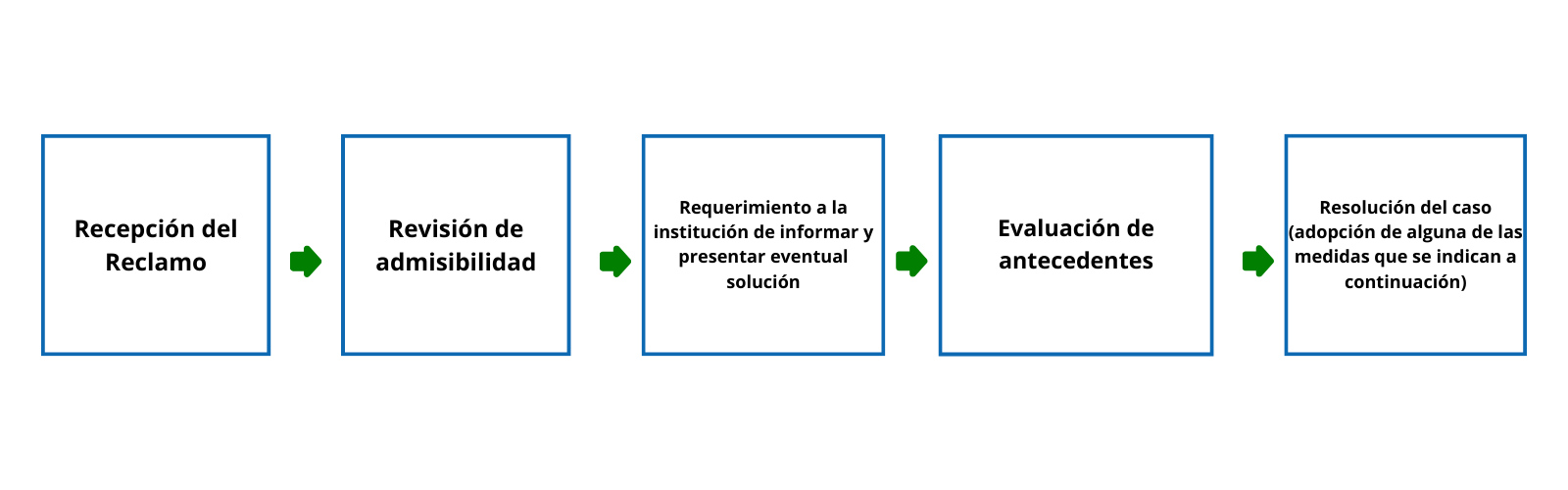
CLAIM

The claim it is the request to the Superintendent for this to intervene as a mediator in the dispute existing between the complainant and any of the institutions of higher education are controlled. 

Purpose of the Claim:

Propose an alternative solution to the particular problem of the claimant in the event of a mediation that instruct the Superintendent.

To file a claim, what should I consider?

I am the person concerned or the I represent

I have a problem that I have not been able to resolve with an Institution of Higher Education.
I have a history to prove the problem (emails, audios, texts, documents, formal, etc..) with the institution of higher education.

Propose an alternative solution to the particular problem of the claimant in the event of a mediation that instruct the Superintendent.

Claim Stages

Edit Content

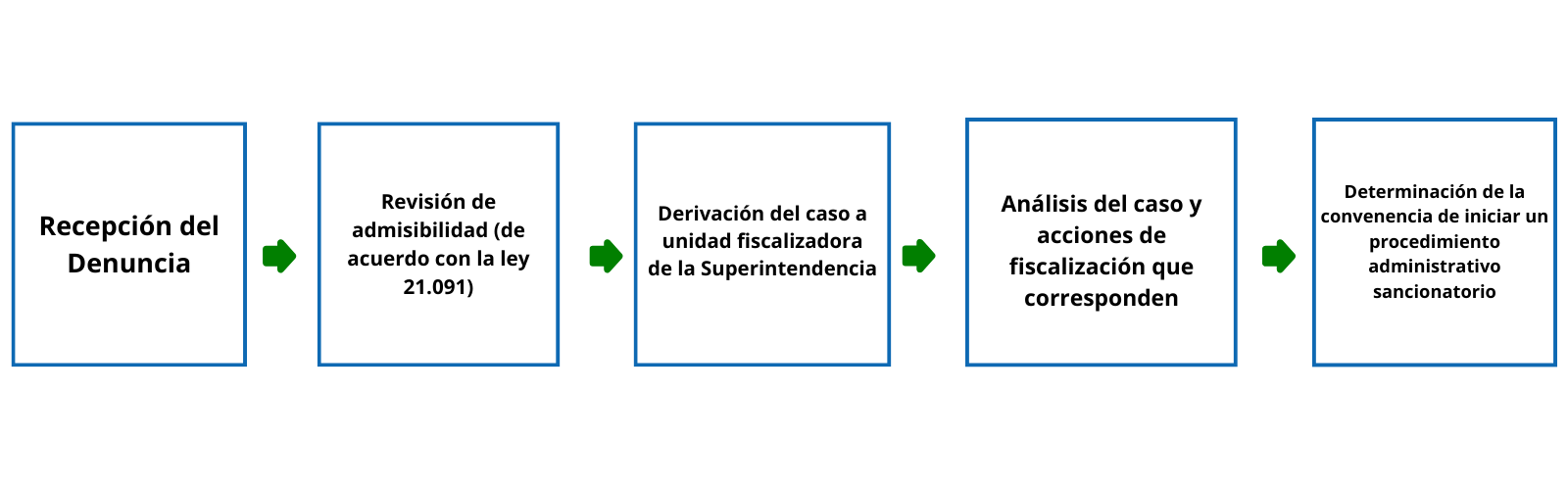
COMPLAINT:

The Complaint it is the act by which informs the Superintendency of a potential irregularity, with the object that this Investigate and take appropriate action

Purpose of the Complaint:

Apply by the Superintendence sanctions
apply in accordance with the law.

It is important to consider that the complaint does NOT pursue a
solution to the particular problem of the complainant

To file a complaint, what should I consider?

I am the person concerned or the I represent.

I want or do NOT want to reveal my identity (If the option is NOT you will be contacted by a member of the SES to lift or ratify such reserve).

I can describe the specific facts constituting a violation, the date and place in which they occurred.

If possible, I will identify the alleged infringer (faculty, students, administrative authority, etc).

Stages of the complaint

What types of complaints fall under SES jurisdiction?

Under the categories of complaints: 

Obtaining academic background: certificates (notes, a regular student, ranking, recognition of hours, title, grade, and exit), plans and programmes, concentration notes

Problems in the community institutional arising from violations of the internal regulations of the institutions 

Charges for removal or academic suspension, charging wrong.

Benefits and/or grants student grants and loans) 


    Misleading advertising 
   Infrastructure or equipment, laboratories, computer support 

    Application and admission selection test 

    Comprehensive policy against sexual harassment, violence and gender discrimination 

What types of complaints are not within the SES's jurisdiction?

  Breaches in the area of school Education 

  Application and renewal of scholarships allocated by the Ministry of Education

 Higher education institutions are not officially recognized by the State

 Requirements in closed institutions 

 Labour issues

  Tuition associated with immigration documentation