

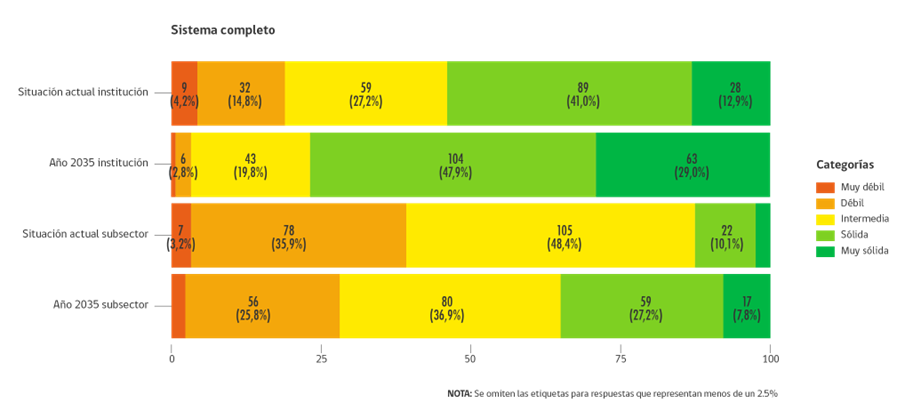
The Superintendency of Higher Education (SES) released the results of the second version of the Survey of Projections and Expectations of Strategic Actors in Higher Education EPAES 2025, highlighting that the 54% of the surveyed authorities rate the situationcurrent status of your institutionon as “ssolid” or “verySolid”, a figure representing a five-percentage-point increase from 2024 (49%).
Regarding the projection to 2035, optimism increases significantly: 82% expects to reach levels “ssolids” or “very ssolids“, with a statistically significant increase in this latter category, which goes from 17%to 29%, compared to the previous version. However, this optimism is dampened when the situation of the subsector to which they belong (universities, professional institutes, or technical training centers) is projected, where the responses tend to be pessimistic. This suggests greater confidence in the internal evolution of each institution than in the development of the system as a whole.
Perception of financial health and sustainability of the institution and its subsector (current situation and outlook for 2035)
This study collects the views of rectors, representatives of academic departments, institutional management teams, and partners from various higher education institutions in the country: state and private universities, technical training centers, and professional institutes. The objective is to understand, from the perspective of management teams, what the current priorities are in academic, administrative, financial, and public policy areas, and how they project these same challenges over a 10-year horizon.
Of a total of 315 invited authorities, a sample of 217 responses, representing 98 higher education institutions.
Institutional Priorities: Strategic Objectives and Investment Projects
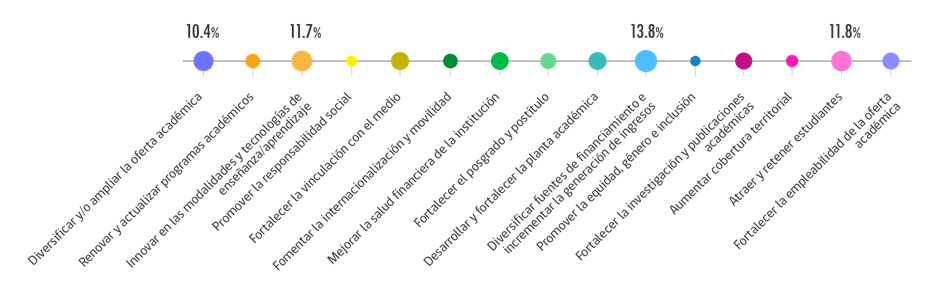
The main strategic objective declared by the institutions in 2025 with a view to 2035 is “Diversify funding sources and increase revenue”which represents a significant change compared to 2024, when this priority ranked third.
They are followed, in second and third place, by the objectives of “Attract and retain students”and“Innovating in teaching and learning modalities and technologies”respectively.
In contrast, the objective “Diversify or expand the academic offering”, which led preferences in 2024, no longer ranks among the system's top three priorities.
Strategic Objectives of Higher Education Institutions with a Horizon to 2035. Full System Results
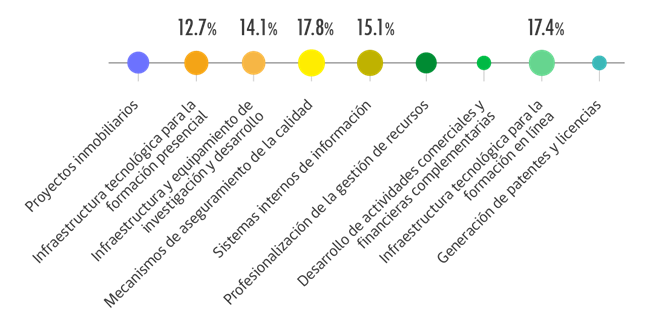
In priority investment projects, the same three areas highlighted in 2024 are maintained: Quality assurance mechanisms, technological infrastructure for online training, and internal information systems. This continuity reflects a strategic consistency in the investment decisions made by institutions.
Priority Investment Projects for Higher Education Institutions with a 2035 Horizon. Full System Results
Financial Management and Sustainability: Strategies
Institutions identify the following as main strategies:
- Income diversification (the most mentioned)
- Academic Offer Adjustment
- Greater efficiency in training processes
When consulting with authorities about alliances, innovations, and priority developments to ensure financial sustainability towards 2035, three main strategic lines emerge:
- Strategic Alliances:
- The need to establish stronger ties with productive sectors, financial entities, local governments, and other higher education institutions has been identified.
- These alliances are seen as key to generating new revenue streams, enhancing the relevance of training offerings to local needs, and strengthening institutional positioning in the territories.
- Innovations with a focus on efficiency:
- Technological innovations stand out, especially those linked to the use of artificial intelligence (AI).
- These technologies are primarily aimed at improving internal and administrative management, as well as optimizing academic processes, increasing institutional efficiency.
- Institutional and academic developments:
- The importance of continuing to strengthen a regulatory environment that favors inter-institutional collaboration, management efficiency, and long-term strategic projection is highlighted.
- At the academic level, the need to expand distance learning programs, diversify careers, diplomas, and postgraduate degrees, and incorporate internationalization as a cross-cutting theme in the educational strategy is emphasized.
Challenges and opportunities
The main challenges identified are institutional positioning, stagnation of public funding, and timely student retention and graduation.
As for opportunities, expectation prevails that AI and new technologies strengthen training processes and internal administrative management, followed by the generation of agreements with productive sectors and the possibility of accessing public funds for improvement projects.
Sector Outlook and Expectations
Projections toward 2035 indicate a system in constant transformation, characterized by increased competition, diversification of formats, and structural adjustments. A 90,8 % of the authorities surveyed anticipate a intensification in the competition to attract students, while an 88.5% projects sustained expansion of the non-face-to-face offering. Likewise, a 74,2 % consider that, on that horizon, the process of setting regulated fees for free services will have been completed.
Other findings reinforce this perspective of change. The perception is increasing that undergraduate enrollment will tend to stabilize or see a slight decrease., going from 59% in 2024 to 74.7% in 2025. At the same time, the conviction is growing that tariffs will not continue to increase as in previous years: a 64% indicates this, compared to 54% last year.
Normative and legislative challenges
The authorities in the higher education system identify a series of regulatory frameworks whose implementation is key for institutional development in the coming years. In particular, the Higher Education Public Financing Bill (FES) is considered Essential or very important by 82.9 % of the surveyed authorities, with special emphasis among representatives of State universities, where its relevance is perceived most importantly.


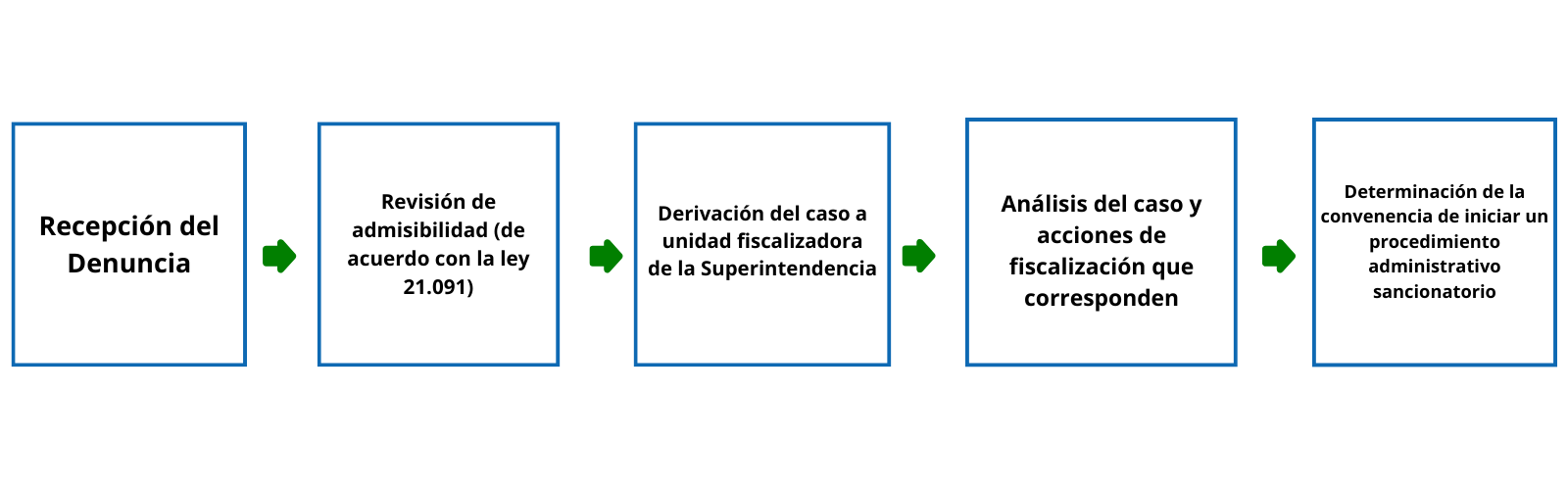
 Obtaining academic background: certificates (notes, a regular student, ranking, recognition of hours, title, grade, and exit), plans and programmes, concentration notes
 Problems in the community institutional arising from violations of the internal regulations of the institutions
 Charges for removal or academic suspension, charging wrong.
 Benefits and/or grants student grants and loans)
 Misleading advertising
 Infrastructure or equipment, laboratories, computer support
 Application and admission selection test
 Comprehensive policy against sexual harassment, violence and gender discrimination


